Introduction
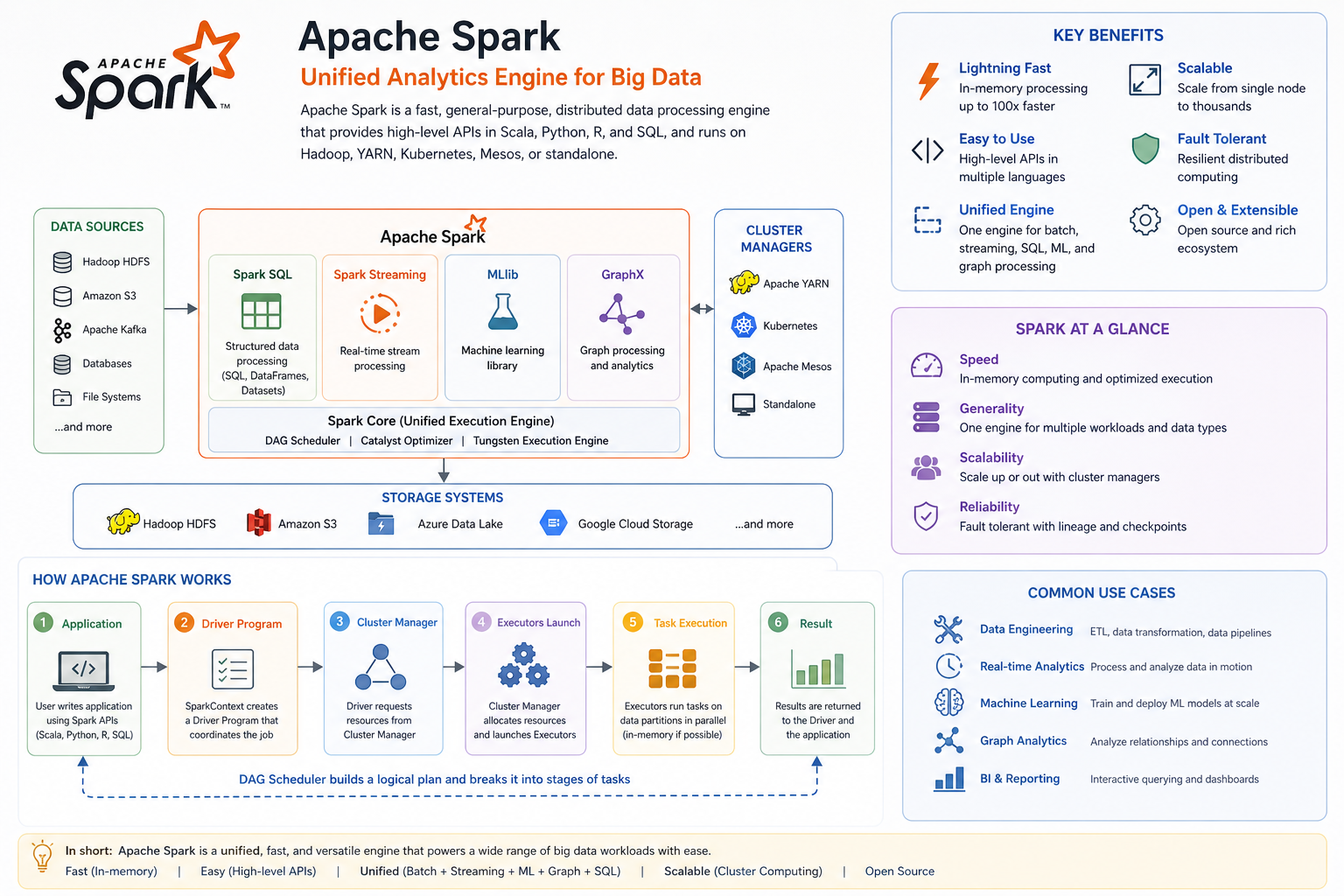
In this lesson, we will delve into the intricacies of working with Key-Value RDDs in Apache Spark using Scala. Key-Value RDDs form the backbone of many big data problems, enabling effective data aggregation, transformation, and retrieval.
Key-Value RDDs in Spark
Key-Value RDDs are a fundamental data structure in Spark designed to facilitate operations on datasets that naturally map to key-value pairs, like those coming from an associative array or a JSON file. This structure forms the basis for operations like groupByKey and reduceByKey, which are essential for aggregation and joins in distributed datasets.
Creating Key-Value RDDs from Existing Data
Key-Value RDDs can be created from existing data sets where data is already structured in the form of key-value pairs. Typically, this kind of data might come from delimited text files where each record is a key-value pair.
Here's a simple method to create Key-Value RDDs in Scala from an array:
val data = Array(("apple", 1), ("banana", 1), ("apple", 1), ("banana", 2))
val kvRDD = sc.parallelize(data)
In this example, kvRDD is an RDD where each record is a tuple, with the first element being the key and the second element being the value.
Transformations: map, flatMap, and filter Usage
Once a Key-Value RDD is established, you can perform transformations to manipulate this data effectively. Transformations like map, flatMap, and filter are universal in Spark:
- map: This transformation can alter each key-value pair's format.
val mappedRDD = kvRDD.map{ case (key, value) => (key, value * 2) } - flatMap: Useful when each entry needs to be transformed into multiple pairs.
val flatMappedRDD = kvRDD.flatMap{ case (key, value) => List.fill(value)((key, 1)) } - filter: Selects pairs that satisfy a particular condition.
val filteredRDD = kvRDD.filter{ case (key, value) => value > 1 }
Actions: collect, count, and saveAsTextFile
To extract data from an RDD, you use actions. Some common actions for Key-Value RDDs include:
- collect: Retrieves all elements of the RDD into an array at the driver program.
val collectedData = kvRDD.collect() println(collectedData.mkString(", ")) - count: Returns the number of elements in the RDD.
val count = kvRDD.count() println(s"Total Count: $count") - saveAsTextFile: Saves the RDD to a text file in a specified path.
kvRDD.saveAsTextFile("path/to/output")
Grouping and Reducing by Key Concepts
Key-based aggregation, such as grouping and reducing, is the cornerstone of working with Key-Value RDDs:
- groupByKey: Aggregates data based solely on keys.
val groupedRDD = kvRDD.groupByKey() - reduceByKey: Perform an operation on the values according to the keys. This transformation is more efficient than
groupByKey.val reducedRDD = kvRDD.reduceByKey(_ + _)
These transformations ensure that data processing can be distributed across cluster nodes and can handle massive datasets efficiently.
Summary / Key Takeaways
In this lesson on working with Key-Value RDDs, you have learned:
- Key-Value RDDs are essential for operations like aggregation and join in Spark.
- You can create Key-Value RDDs using parallelized collection or from structured data.
- Transformations like map, flatMap, and filter help in modifying and extracting data.
- Actions such as collect, count, and saveAsTextFile are crucial for processing results in Spark.
- Utilizing groupByKey and reduceByKey allows efficient distributed data aggregation.
- Grouping and reducing by key enable scalable data processing across large datasets.