Introduction
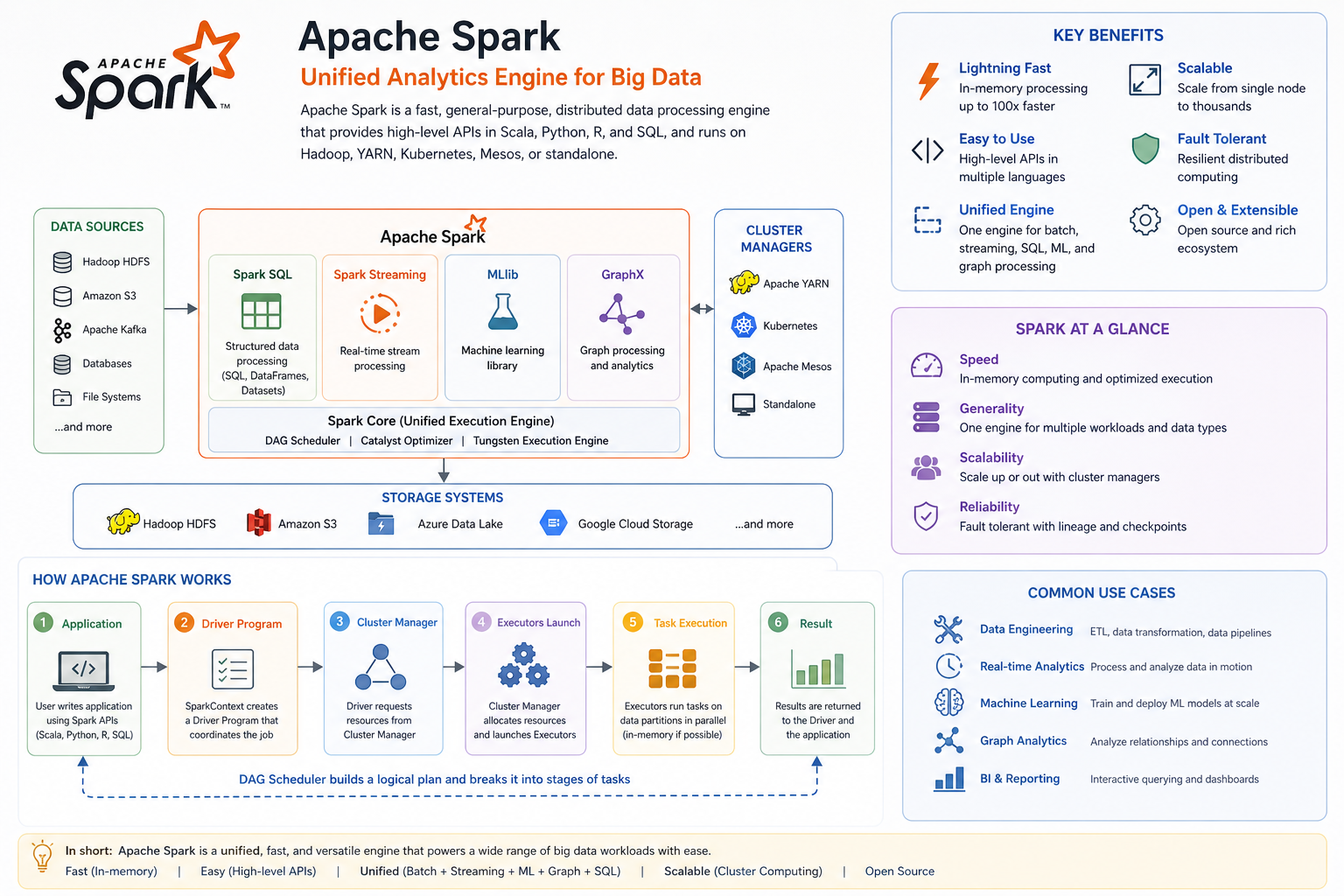
This lesson delves into the concept of Encoders in Apache Spark, their necessity in the context of Datasets, and the associated type safety they provide. Understanding Encoders is crucial as they enable Spark to efficiently convert data between JVM objects and Spark's internal binary format, while also ensuring compile-time type checking, which mitigates errors during runtime.
What are Encoders and Why They are Needed
Encoders are a key component of Spark's Dataset API. They provide a mechanism to convert between JVM objects and Spark's internal representation. Without encoders, the performance of Spark operations would suffer due to the need for excessive serialization and deserialization of data. Encoders are defined for specific types and enable Spark to understand how to serialize and deserialize the data to optimize execution.
Encoders operate in two main ways:
- Built-in Encoders: These are predefined encoders for common data types like
String,Int,Long, and others. Spark provides built-in encoders for these primitive types, which allows for quick conversions. - Custom Encoders: For complex data types or user-defined classes, you can create custom encoders. This is particularly important when working with domain-specific objects, ensuring Spark can efficiently process them without performance overhead.
Built-in Encoders vs Custom Encoders
Built-in Encoders
Spark offers built-in encoders which are optimized for basic data types, making them simple to use and efficient. For instance:
- StringType
- IntegerType
Using built-in encoders is straightforward since Spark automatically recognizes these types. For example, a Dataset of strings would utilize the built-in encoder for type safety and serialization efficiency.
Custom Encoders
When working with complex types or case classes, defining a custom encoder becomes necessary. Custom encoders can be defined using the Encoders object in Spark. Here’s a basic outline of how to define a custom encoder for a case class in Scala:
case class Person(name: String, age: Int)
implicit val personEncoder = Encoders.product[Person]()
This custom encoder allows Spark to understand how to serialize and deserialize Person instances correctly, applying them in Dataset operations.
Compile-time Type Checking Advantages
One of the most significant benefits of using Encoders in Spark is the support for compile-time type checking. This minimizes the potential for runtime errors by validating types at compile time. With Datasets, Spark allows users to specify a type for their data, enforcing constraints that eliminate bugs typically associated with unchecked types in RDDs or DataFrames. For instance, if you attempt to perform an operation on a Dataset of a specific type, Spark will throw a compile-time error if you provide mismatched types:
val personDs: Dataset[Person] = ... // Dataset of Person
val names: Dataset[String] = personDs.map(p => p.name)
If personDs were of the wrong type, any operation that relies on the Person structure would yield an error at compile time, enhancing overall code reliability.
Serialization and Performance Considerations
Serialization is a critical factor when processing large datasets in Spark. Encoders significantly improve the serialization process, particularly with large objects. Built-in encoders handle serialization in a highly optimized manner, whereas custom encoders, while more flexible, require careful implementation to maintain performance.
The choice between using built-in and custom encoders directly impacts how data is serialized.
- Performance: Built-in encoders provide higher throughput and reduced memory usage during transformations due to their optimization.
- Flexibility: Custom encoders offer flexibility but might require additional overhead to manage serialization and deserialization efficiently. It is crucial to evaluate the trade-offs between serialization performance and the complexity of the data structure when implementing custom encoders.
Summary
In this lesson, we explored the role of Encoders in Apache Spark's Dataset API and their importance in providing type safety and efficient serialization. We reviewed the differences between built-in and custom encoders, emphasizing how compile-time type checking can prevent errors and enhance the maintainability of Spark applications. Additionally, we covered performance considerations around serialization to provide a comprehensive understanding of how Encoders affect Spark performance. Understanding these concepts helps in making informed decisions when choosing the best approach for data processing in Spark.