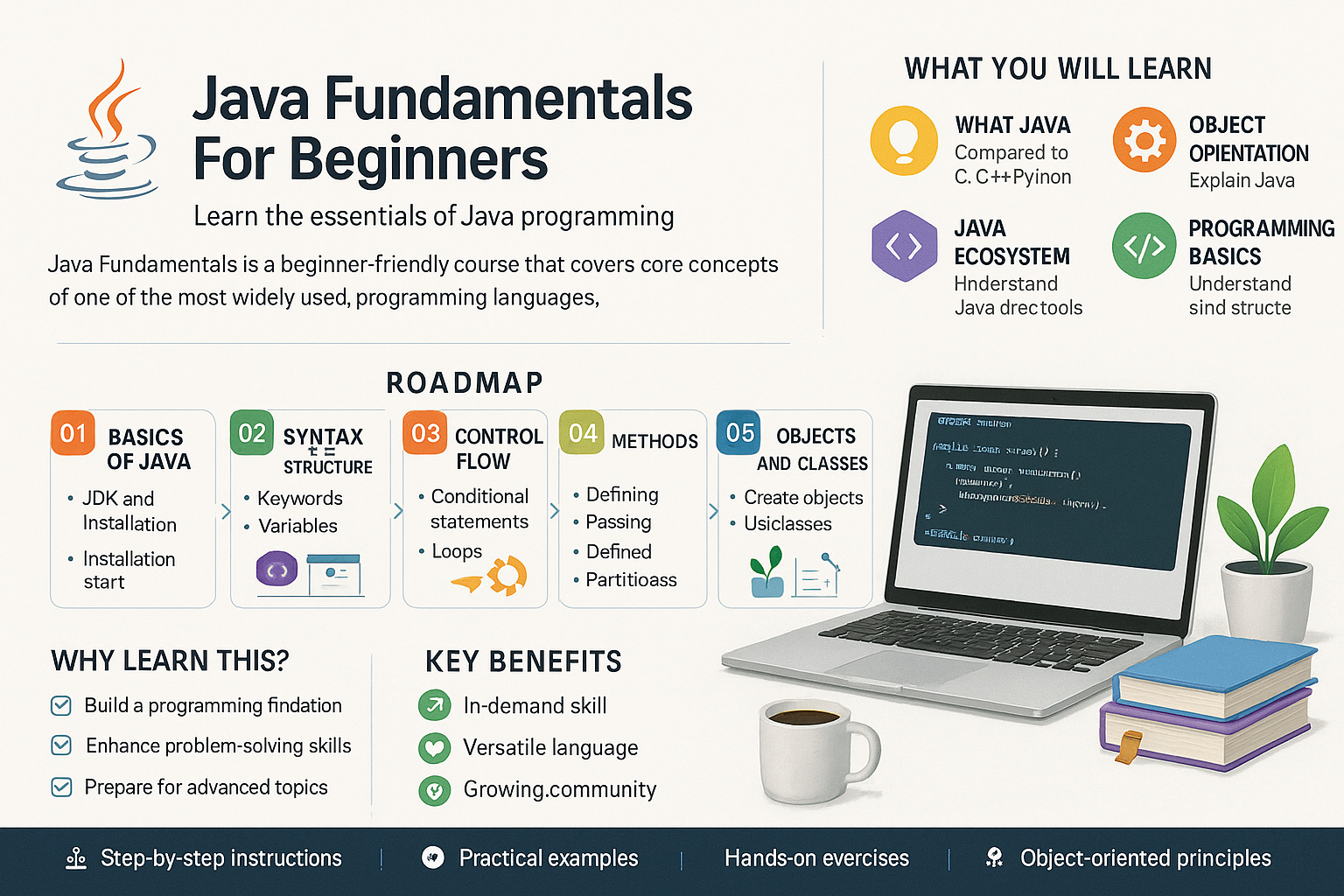
Introduction
In this lesson, we will delve into the foundational aspects of using constructors effectively in Java. Constructors are essential for creating instances of classes and initializing object attributes. We will explore the different types of constructors, including default and parameterized constructors. Additionally, we'll examine the concept of constructor overloading and the role of the 'this' keyword in constructors. This lesson will enhance your understanding of how to properly manage object creation within your Java applications.
Understanding Constructors in Java
In Java, a constructor is a special class method that is called when an object of that class is instantiated. The primary purpose of a constructor is to initialize the object's attributes when the object is created. There are two main types of constructors:
- Default Constructor: A constructor that does not take any parameters. If no constructor is explicitly defined, Java provides a default one automatically.
- Parameterized Constructor: A constructor that takes parameters, allowing for initialized object attributes at the time of creation.
Creating Default Constructors
A default constructor allows an object to be created without any initial parameters. Here's an example:
class Dog {
    String name;
    int age;

    // Default constructor
    Dog() {
        name = "Unknown";
        age = 0;
    }
}

public class DogTest {
    public static void main(String[] args) {
        Dog myDog = new Dog(); // Creating an object using default constructor
        System.out.println("Name: " + myDog.name + ", Age: " + myDog.age);
    }
}
When you run the above program, it outputs:
Output:
Name: Unknown, Age: 0
This shows how the default constructor initializes the attributes to default values.
Implementing Parameterized Constructors
Parameterized constructors are crucial when you want to initialize objects with specific values upon instantiation. Here's an example:
class Cat {
    String name;
    int age;

    // Parameterized constructor
    Cat(String catName, int catAge) {
        name = catName;
        age = catAge;
    }
}

public class CatTest {
    public static void main(String[] args) {
        Cat myCat = new Cat("Whiskers", 5); // Creating an object with parameters
        System.out.println("Name: " + myCat.name + ", Age: " + myCat.age);
    }
}
The output of this program is:
Output:
Name: Whiskers, Age: 5
In this case, the object myCat is created with specified attributes thanks to the parameterized constructor.
Exploring Constructor Overloading
Constructor overloading occurs when a class has multiple constructors with different parameters. This allows for flexible object creation based on different inputs:
class Bird {
    String name;
    int age;

    // Default constructor
    Bird() {
        name = "Unknown Bird";
        age = 0;
    }

    // Parameterized constructor
    Bird(String birdName, int birdAge) {
        name = birdName;
        age = birdAge;
    }
}

public class BirdTest {
    public static void main(String[] args) {
        Bird sparrow = new Bird();
        Bird parrot = new Bird("Parrot", 3);
        System.out.println(sparrow.name + " - Age: " + sparrow.age);
        System.out.println(parrot.name + " - Age: " + parrot.age);
    }
}
The output will be as follows:
Output:
Unknown Bird - Age: 0
Parrot - Age: 3
The Role of the 'this' Keyword in Constructors
The this keyword in Java is used within constructors to refer to the current object instance. It’s especially useful within parameterized constructors to differentiate between class attributes and parameters with the same names:
class Car {
    String model;
    int year;

    // Parameterized constructor
    Car(String model, int year) {
        this.model = model; // differentiating between parameter and instance variable
        this.year = year;
    }
}

public class CarTest {
    public static void main(String[] args) {
        Car myCar = new Car("Toyota", 2020);
        System.out.println("Model: " + myCar.model + ", Year: " + myCar.year);
    }
}
The output of this program will be:
Output:
Model: Toyota, Year: 2020
By using this.model and this.year, we ensure that we are referring to the instance variables, avoiding any potential naming conflicts.
Summary / Key Takeaways
In this lesson on Using Constructors Effectively, you have learned:
- Constructors are essential for object initialization using classes in Java.
- Default constructors provide initial values for object attributes without parameters.
- Parameterized constructors allow for specific attribute assignments upon object creation.
- Constructor overloading facilitates multiple ways to instantiate objects flexibly.
- The
thiskeyword is crucial for distinguishing between class attributes and parameters in constructors. - Proper constructor implementation enhances code efficiency and maintainability in Java applications.