Introduction
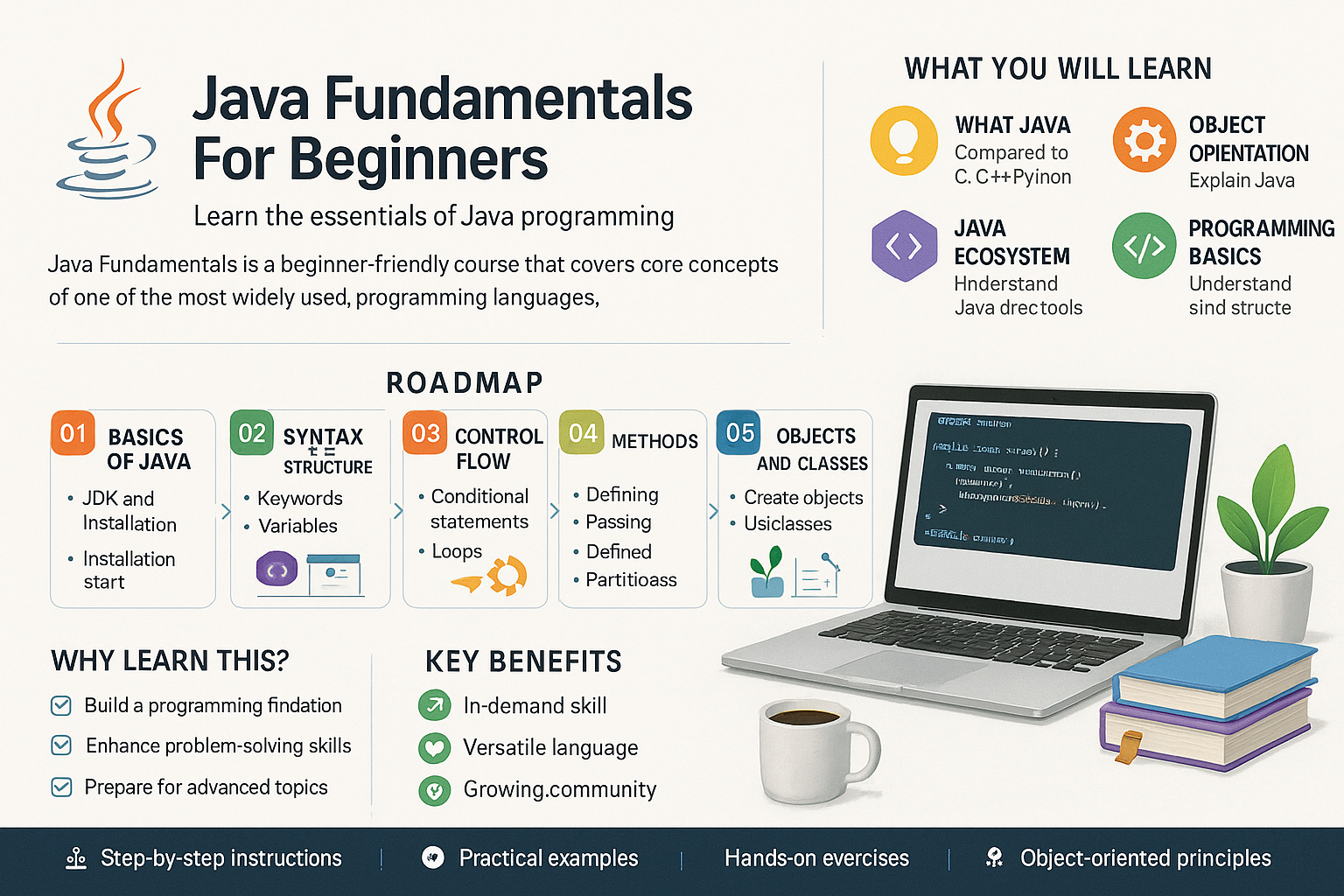
In this lesson, we will explore the guidelines and expectations for your final Java project. This is an opportunity to consolidate your learning by applying the Java concepts and techniques you have acquired throughout the course. We will cover project objectives, evaluation criteria, required Java concepts, develop a timeline for project management, collaborate with peers, and prepare for the final presentation.
Final Project Objectives
The primary objective of your final project is to demonstrate your understanding of Java programming by creating a fully functioning console-based application. Your application should:
- Incorporate key Java concepts learned in the course.
- Solve a real-world problem or meet a user need.
- Be well-structured and maintainable, following best coding practices.
Evaluation Criteria
Your final project will be assessed on the following criteria:
- Functionality: Does the application work as intended?
- Code Quality: Is the code readable, well-commented, and organized?
- Complexity: Does the project incorporate a variety of Java concepts?
- Documentation: Are there adequate comments and documentation provided?
- Presentation: Is the final presentation clear and engaging?
Required Java Concepts and Techniques
To successfully complete your project, ensure you use:
- Classes and Objects: Implement appropriate class structures and object-oriented programming principles.
- Control Structures: Utilize control flow statements and loops effectively (e.g., if-else, switch, for, while).
- Exception Handling: Implement error handling using try-catch blocks to manage potential runtime errors gracefully.
- Java Collections: Leverage Java collections for data management (e.g., ArrayList, HashMap).
Example Concept Implementation
Below is a simple example of a class implementing a basic user management system:
import java.util.ArrayList;

class User {
    private String name;
    private int age;

    public User(String name, int age) {
        this.name = name;
        this.age = age;
    }

    public String getName() {
        return name;
    }

    public int getAge() {
        return age;
    }
}

class UserManager {
    private ArrayList<User> users;

    public UserManager() {
        users = new ArrayList<>();
    }

    public void addUser(User user) {
        users.add(user);
    }

    public void listUsers() {
        for (User user : users) {
            System.out.println("User: " + user.getName() + ", Age: " + user.getAge());
        }
    }
}

public class Main {
    public static void main(String[] args) {
        UserManager manager = new UserManager();
        manager.addUser(new User("Alice", 30));
        manager.addUser(new User("Bob", 25));
        manager.listUsers();
    }
}
Program Explanation
- The
Userclass represents a user with a name and age. - The
UserManagerclass manages a list of users, providing methods to add and list users. - In the
Mainclass's main method, we create aUserManager, add users, and then list them.
Expected Output:
User: Alice, Age: 30
User: Bob, Age: 25
Developing a Project Timeline and Milestones
Creating a project timeline is essential for effective management. Follow these steps:
- Define Milestones: Break your project into major milestones (e.g., defining requirements, implementing features, testing).
- Set Deadlines: Assign realistic deadlines for each milestone to ensure steady progress.
- Review Progress: Regularly check your progress against the timeline and adjust as necessary to meet deadlines.
Collaboration and Feedback
Engaging with peers is crucial for enhancing project quality. Here’s how you can collaborate:
- Peer Reviews: Organize sessions to review each other's code and provide constructive feedback.
- Discussion Groups: Form small groups to discuss project challenges and brainstorming solutions.
Project Presentation and Demonstration Requirements
Prepare to present your project effectively by:
- Creating a Presentation: Outline the key components of your project, its features, how it works, and the challenges faced.
- Demonstrating Functionality: Be ready to run your application and showcase its features during your presentation, clearly explaining each part.
- Handling Questions: Prepare to answer questions from your audience regarding your project decisions and implementation.
Summary / Key Takeaways
In this lesson, you have learned about:
- Final Project Objectives: Your project should solve a real-world problem using Java concepts.
- Evaluation Criteria: Functionality, code quality, complexity, documentation, and presentation are essential for assessment.
- Required Java Concepts: Incorporate classes, control structures, exception handling, and collections into your project.
- Project Timeline: Develop a structured timeline with milestones to manage your project effectively.
- Collaboration: Engage with peers for feedback and improve your project quality.
- Presentation Preparation: Clearly demonstrate your application and explain its workings during the presentation.