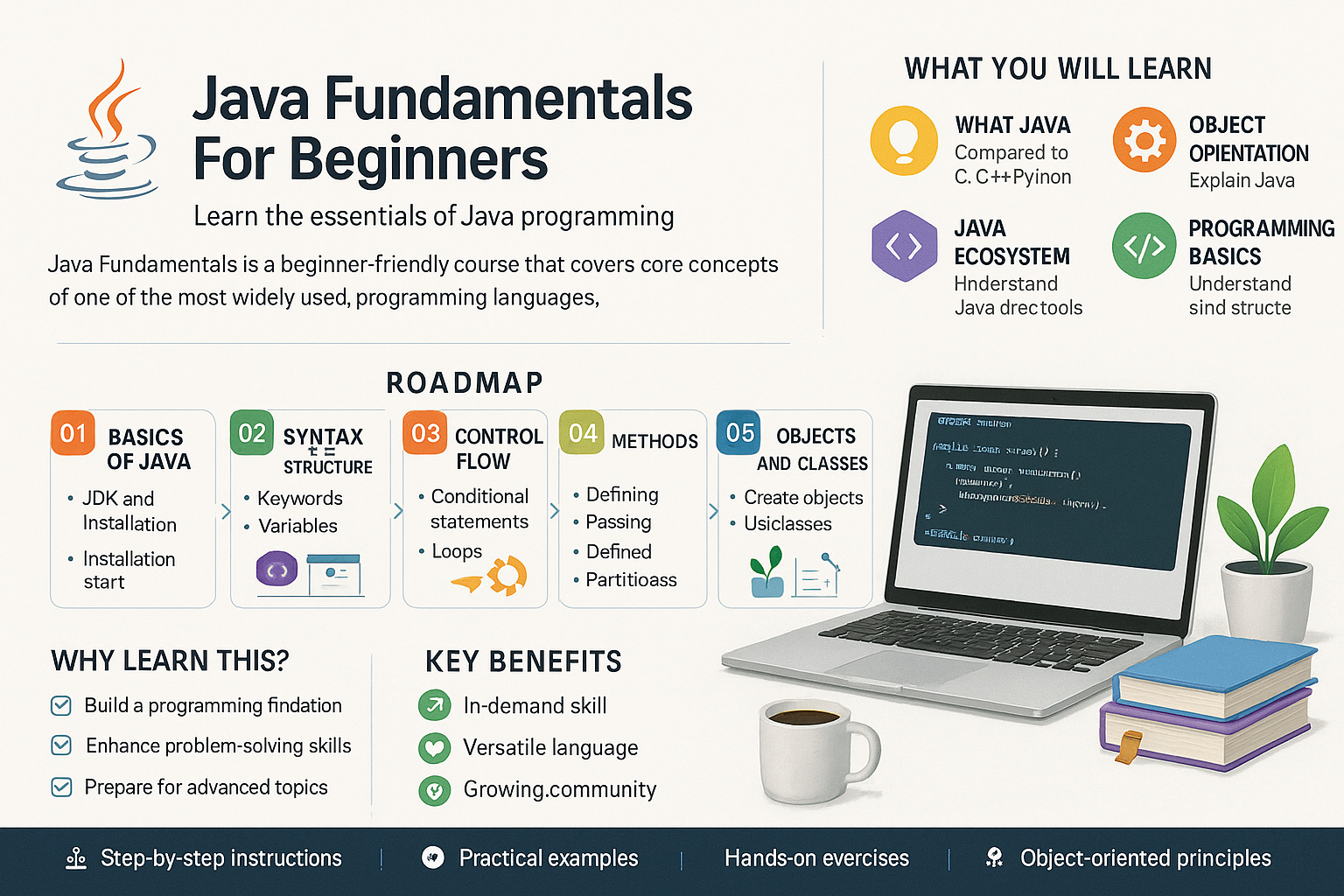
Welcome to the exciting world of Java programming! In this chapter, we will embark on a journey to explore one of the most powerful and widely-used programming languages today. Java has played a pivotal role in software development since its inception in the mid-'90s due to its platform independence and object-oriented nature. Whether you aspire to build web applications, mobile apps, or enterprise-level solutions, mastering Java is an essential stepping stone for your programming career.
What You Will Learn
As we navigate through this chapter, you will be introduced to fundamental aspects of Java that lay the groundwork for your programming journey. Here’s a glimpse of the areas we will cover:
- What is Java? - Gain a clear understanding of what Java is and the unique features that distinguish it from other programming languages.
- Importance of Java in Modern Programming - Discover why Java remains a vital language in the tech industry, influencing various domains like enterprise solutions, Android development, and more.
- Comparison of Java with C, C++, and Python - Assess Java's strengths and weaknesses by comparing it with other popular programming languages.
- Understanding the Java Development Ecosystem - Learn about the different tools, frameworks, and libraries available within the Java ecosystem that enhance productivity and streamline development.
- Getting Started: Installing JDK and IDEs - Follow step-by-step instructions to set up your Java Development Kit (JDK) and Integrated Development Environment (IDE) to start coding.
- Setup Java in IntelliJ and Run Sample Java Program - Put your setup to the test by running your first Java program in IntelliJ IDEA, a popular IDE for Java development.
Importance and Relevance of These Topics
Understanding Java's core principles and its development ecosystem is crucial not just for novice programmers but for anyone seeking to adapt to the ever-evolving tech landscape. The skills you will cultivate in this chapter will build your confidence as a programmer and equip you with the tools necessary to tackle more complex tasks in later chapters.
Preview of Each Lesson Topic
- What is Java?: You will learn about Java's history and architecture, helping you appreciate the language’s design goals including portability and security.
- Importance of Java in Modern Programming: This lesson will highlight Java's significance in different sectors, including web development, data processing, and embedded systems.
- Comparison of Java with C, C++, and Python: Gain insights into where Java fits in the programming spectrum and why many developers choose Java for specific projects.
- Understanding the Java Development Ecosystem: Discover the vast collection of libraries and frameworks that enhance Java's functionality, making it a powerful choice for developers.
- Getting Started: Installing JDK and IDEs: Follow a straightforward installation tutorial so you are ready to write Java code with the necessary tools.
- Setup Java in IntelliJ and Run Sample Java Program: Experience the thrill of writing your first program, reinforcing all that you've learned in a hands-on manner.
Learning Objectives
By the end of this chapter, you will be able to:
- Define what Java is and its relevance in the programming world.
- Identify key differences between Java and other programming languages.
- Navigate the Java ecosystem and understand the tools available to you.
- Successfully install JDK and configure your IDE for Java development.
- Write and execute your first Java program with confidence.
Motivation for Your Journey Ahead
As you embark on this journey through Java Fundamentals, remember that programming is not just about writing code but solving problems creatively. Each lesson is crafted to build upon the last, ensuring you have both knowledge and practical skills. Embrace every challenge with an open mind—your growth as a programmer starts here!
Ready to Begin?
Are you excited to unlock the world of Java programming? Gather your determination and enthusiasm, and let's dive into our first lesson! The journey of a thousand lines of code begins with a single command—let's make it happen!