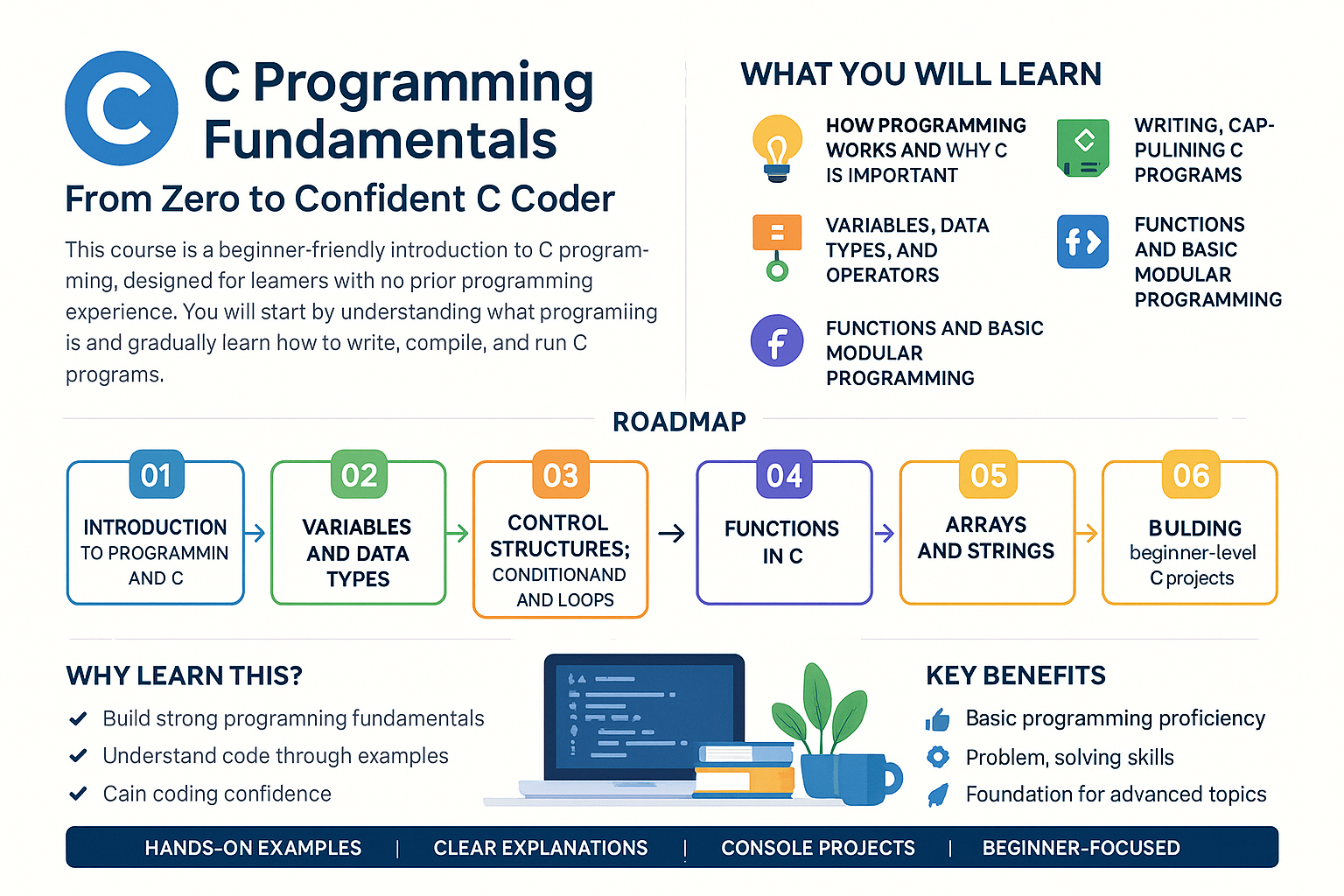
Introduction
In this lesson, we will dive into writing your very first C program. We will explore the structure of a C program, set up our programming environment, compile our code, and understand basic input and output functionalities. Additionally, we'll learn how to debug and troubleshoot any issues that arise along the way. By the end of this lesson, you will feel confident in creating your own basic C program.
Understanding the Structure of a C Program
Before we jump into coding, let's first understand the fundamental structure of a C program. A typical C program is composed of the following components:
- Preprocessor Directives: These are lines that begin with
#(for example,#include <stdio.h>). They include files and libraries needed for the program. - Main Function: This is the entry point of every C program. It is where the execution starts. The format typically looks like this:
int main() { // Code goes here return 0; } - Statements and Expressions: This is the body of the program, where you write code to perform specific tasks.
- Return Statement: Indicates the program has finished executing and can return a status code.
With this structure in mind, let’s set up our environment.
Setting Up Your C Programming Environment
Having successfully setup your C environment in the previous lesson, you need to ensure your IDE or text editor is ready. Make sure your C compiler (like GCC or Clang) is correctly configured. Now you are prepared to write your first program.
Writing and Compiling Your First Simple C Code
Let’s create a simple "Hello, World!" program. This classic example will help you understand how to compile and execute a C program.
Hello, World! Program
Create a new file called hello.c and write the following code:
#include <stdio.h>

int main() {
    printf("Hello, World!\n"); // Print Hello, World! to the console
    return 0;
}
Explanation
#include <stdio.h>allows you to use the input/output functions.int main()is the main function where the execution starts.- `printf(