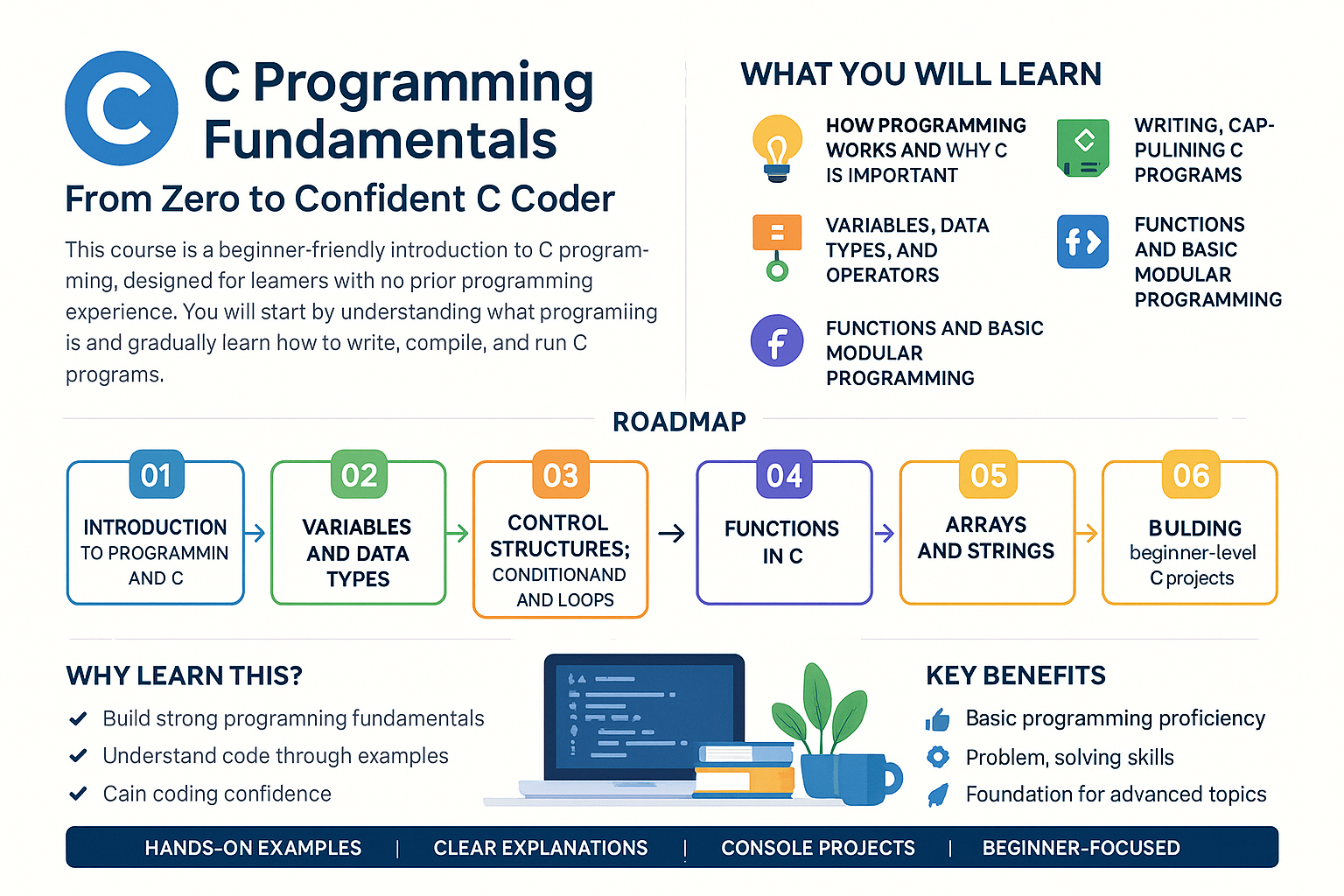
Introduction
In this lesson, we will explore practical examples of working with pointers in C programming. Building on our foundational knowledge from previous lessons, we will delve into pointer arithmetic, dynamic memory allocation, and passing pointers to functions. We will also highlight common pitfalls associated with pointers and how to avoid them, ensuring you become more confident in your C coding skills.
Understanding Pointer Basics and Syntax in C
Pointers are variables that store the memory address of another variable. This capability allows for efficient data manipulation and enhanced flexibility in how data is organized. Here’s a refresher on pointer syntax:
int a = 10;
int *p = &a;  // p now holds the address of a
In the code above, p is a pointer to an integer, and it holds the address of the variable a. This direct access to memory addresses is crucial for many advanced programming techniques.
Implementing Pointer Arithmetic for Array Manipulation
Pointer arithmetic allows us to traverse and manipulate arrays effectively. When we increment a pointer, it moves to the next memory location based on the type it points to. Here’s an example of using pointer arithmetic to iterate through an array:
#include <stdio.h>

int main() {
    int arr[] = {10, 20, 30, 40, 50};
    int *ptr = arr;  // Pointing to the first element

    printf("Array elements using pointer arithmetic:\n");
    for (int i = 0; i < 5; i++) {
        printf("%d \