AIStudyLabs
MCP Interview Questions for AI Engineer
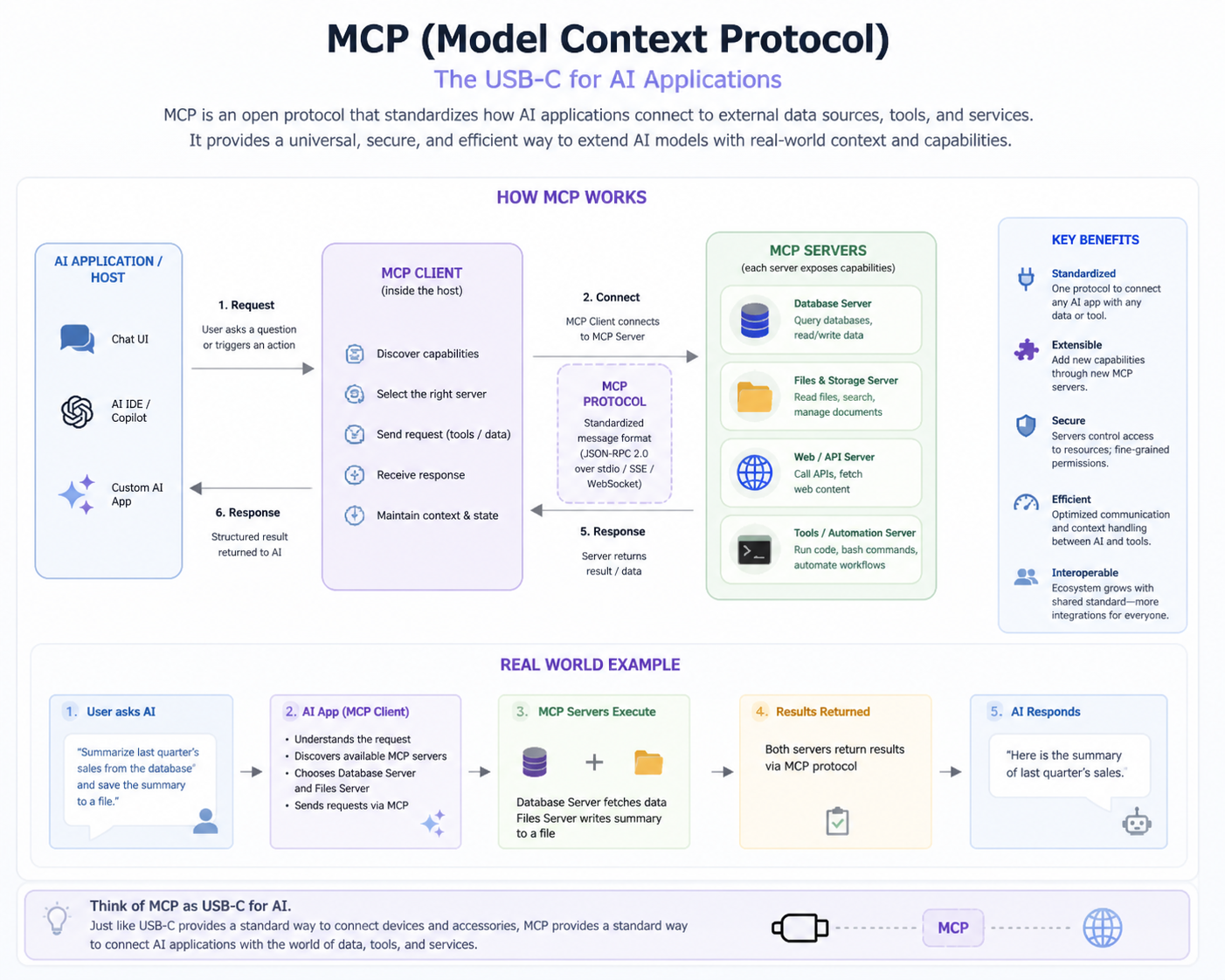
This course, titled MCP, is designed to equip learners with the skills needed to excel in technical interviews for roles in generative AI. The course focuses on a comprehensive range of interview questions and answers, covering conceptual, scenario-based, and practical aspects. By exploring these types of questions, learners will gain a deep understanding of key concepts, as well as how to apply them effectively in interview settings.
Our curriculum leverages real-world interview techniques used by leading technology companies, ensuring that learners are not only prepared to answer questions but can also demonstrate their problem-solving abilities and critical thinking. With a focus on mastering the art of technical interviews, this course is tailored for anyone looking to enhance their interview performance and secure a role in the competitive field of generative AI.
What You'll Learn
- What MCP (Model Context Protocol) is and why it exists
- MCP architecture (host, client, server interaction)
- Roles of host, client, and server
- Tools and how they execute actions
- Resources as read-only data sources
- Prompts as reusable templates
- Differences between tools, resources, and prompts
- Tool calling lifecycle (end-to-end flow)
- Transport mechanisms (stdio vs HTTP)
- Request/response structure and communication flow
- JSON schema for input definition and validation
- Handling invalid inputs and errors
- Creating and structuring MCP servers
- Defining tools with proper schemas
- Sync vs async execution and when to use async
- Handling long-running or slow tools
- Security basics (authentication, authorization, input validation)
- Scaling MCP systems (stateless design, multiple clients)
- Debugging and logging MCP interactions
- Designing MCP-based systems (real-world use cases and trade-offs)
Basic Interview Questions
- What is MCP (Model Context Protocol)?
- Why is MCP needed?
- What problems does MCP solve?
- What are the main components of MCP?
- What is an MCP Host?
- What is an MCP Client?
- What is an MCP Server?
- How do MCP components interact?
- What is a tool in MCP?
- What is a resource in MCP?
- What is a prompt in MCP?
- What is the difference between tools and resources?
- What is tool calling?
- What is the basic flow of tool execution?
- What is JSON schema?
- Why is validation important in MCP?
- What is a required field?
- What is an optional field?
- What is stdio transport?
- What is HTTP transport?
- What is the difference between stdio and HTTP?
- What is request-response flow?
- What is an API?
- How is MCP different from REST APIs?
- What is structured data?
- What is the client-server model?
- What is a simple use case of MCP?
- What is context in MCP?
- What is a schema-driven approach?
Intermediate Interview Questions
- Explain the MCP architecture in detail.
- How does tool calling work step by step?
- How are tools defined in MCP?
- How do resources differ from APIs?
- How are prompts used in MCP?
- How does MCP handle context sharing?
- What is the role of JSON schema in tools?
- How do you validate tool inputs?
- What happens when validation fails?
- How do MCP clients discover tools?
- How do you design a tool schema?
- What are best practices for tool design?
- How do you integrate MCP with an IDE?
- What is the role of the transport layer?
- How does HTTP-based MCP communication work?
- What are common errors in MCP systems?
- How do you debug MCP tool failures?
- How do you log MCP interactions?
- What is async execution in MCP?
- When should you use async vs sync?
- How do you handle long-running tools?
- What are caching strategies in MCP?
- How do you reduce latency?
- How do you handle multiple clients?
- How do you structure an MCP server project?
- How do you test MCP tools?
- What are common security risks?
- How do you handle authentication?
- How do you handle authorization?
- How do you version MCP tools?
Advanced Interview Questions
- How do you design a scalable MCP system?
- How do you implement fault tolerance in MCP?
- How do you optimize MCP tool performance?
- How do you handle high concurrency in MCP?
- How do you implement monitoring for MCP?
- How do you manage context across multiple tools?
- How do you implement secure tool execution?
- How do you handle async responses in MCP?
- How do you implement tool versioning?
- How do you handle tool dependencies?
- How do you implement caching for MCP tools?
- How do you handle rate limiting?
- How do you implement load balancing?
- How do you design MCP for multi-tenant environments?
- How do you implement observability in MCP?
- How do you handle distributed MCP servers?
- How do you secure communication between Client and Server?
- How do you manage sensitive data in MCP?
- How do you handle versioned APIs in MCP tools?
- How do you implement retries and backoff?
- How do you monitor tool performance metrics?
- How do you handle tool deprecation?
- How do you implement circuit breakers?
- How do you optimize network communication?
- How do you implement real-time streaming?
- How do you handle stateful operations in MCP?
- How do you perform load testing?
- How do you handle multi-region deployments?
- How do you ensure high availability?
- How do you implement observability for async tasks?