This course focuses on preparing you for data engineering interviews through a comprehensive set of interview questions and answers. You will explore conceptual, scenario-based, and practical questions that are commonly asked by technology companies in real-world interviews. Our curriculum is designed to enhance your understanding of key data engineering concepts while providing you with strategies to articulate your knowledge effectively. By engaging with this course, you will gain the confidence and skills necessary to tackle various technical interview challenges, ensuring you are well-prepared for your next data engineering role.
AIStudyLabs
Data Engineer Interview Questions
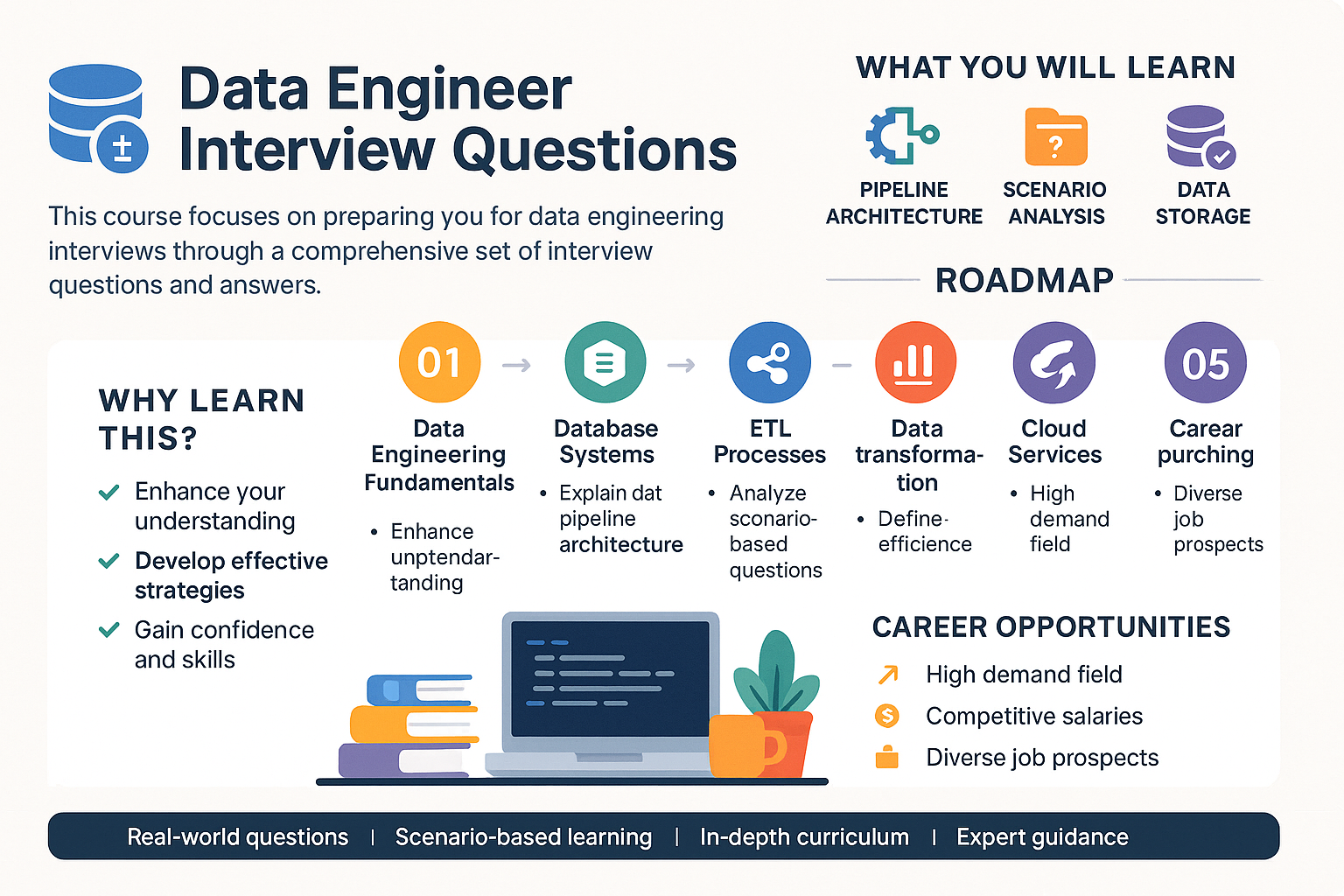
What You'll Learn
- Understand key data engineering concepts essential for interviews.
- Explain data pipeline architecture and its components clearly.
- Analyze scenario-based questions to identify optimal solutions.
- Evaluate different data storage solutions and their use cases.
- Solve practical data transformation problems efficiently.
- Apply knowledge of ETL processes in interview scenarios.
- Identify common pitfalls in data engineering interviews.
- Compare various data processing frameworks and their advantages.
- Explain the importance of data quality and integrity in engineering tasks.
- Demonstrate effective problem-solving techniques for technical questions.
- Understand the role of cloud services in modern data engineering.
- Answer interview-style questions with confidence and clarity.
Data Engineering Fundamentals
- What is the difference between structured, semi-structured, and unstructured data?
- Explain the ETL process in data engineering.
- What are the advantages and disadvantages of using a cloud-based data storage solution?
- How would you optimize a data pipeline to improve performance?
- What is data warehouse denormalization, and when would you use it?
- Describe the CAP theorem and its implications for distributed data systems.
- What role does data normalization play in data engineering, and how does it differ from denormalization?
- What are the considerations for choosing between a SQL and NoSQL database for a specific application?
- How would you ensure data quality and integrity in a large-scale data processing system?
- Can you explain what a data lake is and how it differs from a data warehouse?
Database Systems
- What are the key differences between relational databases and NoSQL databases?
- Can you explain what database normalization is and why it is important?
- What is the significance of database indexing, and how do you create an index in SQL?
- How would you handle database migrations in a production environment to ensure minimal downtime?
- Explain the CAP theorem and its relevance in database design.
- Describe the differences and use cases for OLTP and OLAP systems.
- How would you implement a full-text search in a database using SQL?
- What strategies would you use to optimize query performance in a large SQL database?
- How do you ensure data consistency when using a distributed database system?
SQL - Structured Query Language
- What is the purpose of the HAVING clause in SQL?
- What is the purpose of using GROUP BY in SQL?
- Explain the difference between INNER JOIN and LEFT JOIN.
- What are OLAP queries and when are they used?
- How can you utilize the WITH clause in SQL?
- Describe a scenario where you would use OLAP instead of OLTP.
- How do you write a correlated subquery in SQL?
- What is a CROSS JOIN and when would you use it?
Data Warehousing Concepts
- What is a data warehouse, and why is it important in data engineering?
- Explain the difference between a Star Schema and a Snowflake Schema. When would you use one over the other?
- Describe the ETL process and compare it to ELT. When would you prefer one over the other?
- What considerations are important when designing a data warehouse architecture?
- What is Data Mart, and how does it differ from a Data Warehouse?
- Explain the concept of Slowly Changing Dimensions (SCD) in the context of data warehousing. How is it implemented?
- What is the significance of indexing in data warehouses, and how can it improve query performance?
- How does partitioning work in a data warehouse and why is it beneficial?
- What are the key components of a modern data warehousing stack?
- Discuss the role of a data engineer in the process of data warehousing and how they contribute to business value.
Data Integration Techniques
- What is ETL, and how does it differ from ELT in data integration?
- Can you explain the concept of data pipelines and their significance in data engineering?
- How do you choose between a batch processing pipeline and a stream processing pipeline?
- What role do data integration tools like Apache Nifi and Talend play in designing data pipelines?
- How do data lakes differ from data warehouses in terms of data integration strategies?
- What challenges do you face with real-time data integration, and how can they be addressed?
- Explain the concept of data lineage and its importance in a data integration process.
- How do you ensure data quality in a data integration pipeline?
- What are the benefits and limitations of using cloud-based platforms for data integration?
- Explain the importance of orchestration in data pipeline management and name some orchestration tools commonly used.
Big Data Technologies
- What are the key components of Hadoop, and how do they interact with each other in a typical data engineering workflow?
- How does Apache Spark differ from Hadoop MapReduce, and what are the advantages of using Spark for data processing?
- Explain the concept of data partitioning in Spark. Why is it important, and how can it affect the performance of a Spark job?
- What scenarios would you choose HDFS over other storage systems?
- How does Spark Streaming achieve low-latency data processing, and what are the core components involved in its architecture?
- Can you explain the role of a shuffle operation in Spark? What are some best practices to manage and optimize shuffling?
- What are the differences between the RDD, DataFrame, and Dataset APIs in Spark, and in what situations would you choose one over the others?
- How does the YARN Resource Manager differ from the Node Manager in Hadoop, and what roles do they play in a Hadoop cluster?
- What is the significance of the `lineage` in the context of Spark RDDs and how can it affect fault tolerance?
- How do you manage schema evolution in Spark when working with structured data sources like Avro or Parquet?
Data Modeling
- What is data normalization, and why is it important in data modeling for database design?
- Explain the concept of denormalization and give a scenario where it might be preferred over normalization.
- What is an Entity-Relationship Diagram (ERD), and how is it utilized in data modeling?
- Describe the difference between logical and physical data models.
- How do you determine the primary key in a data model, and what are some considerations for choosing a primary key?
- What are composite keys, and when would you use them in data modeling?
- How do you design entity relationships in a data model to accommodate future scalability and performance?
- What challenges might you face with relationship modeling, and how can you overcome them?
- Can you explain the use of foreign keys and how they facilitate database relationships?
Data Quality and Governance
- What are the key principles of data quality management and how would you apply them in a real-world data engineering project?
- Define data governance and its importance in a data-driven organization. How would you ensure data governance in your engineering processes?
- Explain the impact of data quality on business decision-making. Can you provide an example of a decision that was affected by poor data quality?
- What metrics would you use to measure data quality, and how can these metrics be practically implemented?
- How can data governance policies ensure compliance with data privacy regulations such as GDPR?
- What is data lineage, and why is it crucial in data governance frameworks?
- What role does metadata management play in maintaining data quality and governance?
- How would you design a data quality monitoring system in a large-scale data pipeline?
- What strategies would you use to prevent data quality issues from occurring at the source?
Data Security Best Practices
- What is data encryption and how does it protect data both in transit and at rest?
- Can you explain the difference between symmetric and asymmetric encryption, and provide scenarios for their respective use?
- What are some common vulnerabilities associated with poorly implemented encryption, and how can they be mitigated?
- What are best practices for implementing secure key management?
- Describe tokenization and how it is used to secure sensitive data.
- How does hashing differ from encryption and when should it be used?
- How would you implement a secure data pipeline to ensure data integrity and confidentiality during processing and storage?
- What role does data backup play in data security, and what are best practices for implementing them?
- Describe how access controls contribute to data security and provide examples of their effective implementation.
- What are the typical challenges encountered when securing data on the cloud, and how can organizations effectively address them?
Cloud Data Engineering
- What are the primary services offered by AWS for data engineering, and how would you choose between them for a specific use case?
- How does Google Cloud Platform's BigQuery differ from traditional relational databases, and what are its advantages in a data engineering context?
- Describe how to design a data pipeline on Azure using Azure Data Factory, and highlight key components involved.
- Explain the concept of a data lake, and discuss how AWS Lake Formation simplifies the creation and management of a data lake.
- How does Azure Synapse Analytics integrate different data processing capabilities, and what advantages does it offer for a data engineering team?
- How can you ensure data security in a data pipeline built on Google Cloud Platform?
- What role does AWS Lambda play in serverless data engineering, and how can it be used to run ETL operations?
- Discuss the use case of AWS Glue in integrating disparate data sources for a data lake and its role in schema discovery and data transformation.
- How does Google Cloud Dataproc enable scalable and flexible data processing, and what are some practical scenarios for its use?
- Explain the concept of 'event-driven data architecture' on cloud platforms and its benefits in modern data engineering, using AWS as an example.
Data Processing Frameworks
- What is Apache Kafka, and how does it differ from traditional message brokers?
- How does stream processing with Kafka differ from batch processing?
- Can you explain the role of a Kafka Producer and Consumer in a Kafka ecosystem? How do they interact with brokers?
- What are Kafka partitions, and why are they important for performance and scalability?
- How does Kafka ensure data durability and reliability?
- Describe the process of setting up a Kafka Streams application for real-time data processing.
- How do Kafka Connectors facilitate data movement between Kafka and external systems?
- What role does Zookeeper play in a Kafka cluster, and can Kafka operate without it?
- What are Kafka Stream partitions and how do they aid in preserving message ordering?
- How do you handle late-arriving or out-of-order events in Kafka Streams?
Real-Time Data Processing
- What is real-time data processing, and how does it differ from batch processing?
- Explain the architecture and role of Apache Kafka in a real-time data processing system.
- How does Apache Flink ensure exactly-once semantics in stream processing, and why is this important?
- Describe the concept of windowing in stream processing and its relevance in real-time data analytics.
- What is the role of Zookeeper in a Kafka-based data processing ecosystem?
- How do you implement stateful computation in a stream processing application, and why is it important?
- In what ways can you optimize the performance of a real-time data processing system?
- What are the challenges associated with exactly-once message delivery in distributed systems, and how do you address them?
- How do you handle late data in stream processing systems, and what tools or techniques do you use?
Data Pipeline Orchestration
- What is a data pipeline, and why is orchestration important in managing data pipelines?
- How does Apache Airflow facilitate the orchestration of data pipelines, and what are its core components?
- Compare and contrast Apache Airflow and Prefect for data pipeline orchestration.
- Describe how dependency management works in data pipeline orchestration and its significance.
- Explain the role of monitoring and logging in data pipeline orchestration, and how can these be effectively implemented?
- What challenges might a data engineer encounter when orchestrating data pipelines in a cloud environment, and how can these challenges be mitigated?
- How do containerization and orchestration tools like Kubernetes assist in data pipeline orchestration?
- What strategies can data engineers employ to ensure efficient error handling and recovery within data pipelines?
- How can data engineers leverage orchestration to improve data pipeline security?
- What factors should be considered when selecting a data pipeline orchestration tool, and how do these factors impact decision making?
Performance Tuning of Data Systems
- What is data partitioning, and why is it important for performance tuning in data systems?
- How does indexing affect the performance of database queries? Can you provide examples of when indexes might hinder performance?
- Explain the role of caching in data systems and how it enhances performance. Highlight potential pitfalls if implemented incorrectly.
- What is a query execution plan, and why is it crucial for diagnosing performance issues in data systems?
- Describe the role of columnar storage formats in performance tuning. How do they differ from row-oriented storage?
- Explain the concept of sharding in distributed databases and its impact on system performance.
- What are the benefits and drawbacks of using denormalized data structures in data storage systems? Discuss their impact on performance.
- What strategies can be used for optimizing batch processing tasks in data systems?
- Discuss how data skew can affect performance in distributed data processing systems and how it can be mitigated.
- What methods can be used to monitor and maintain performance in data systems?