AIStudyLabs
Java Fundamentals For Beginners
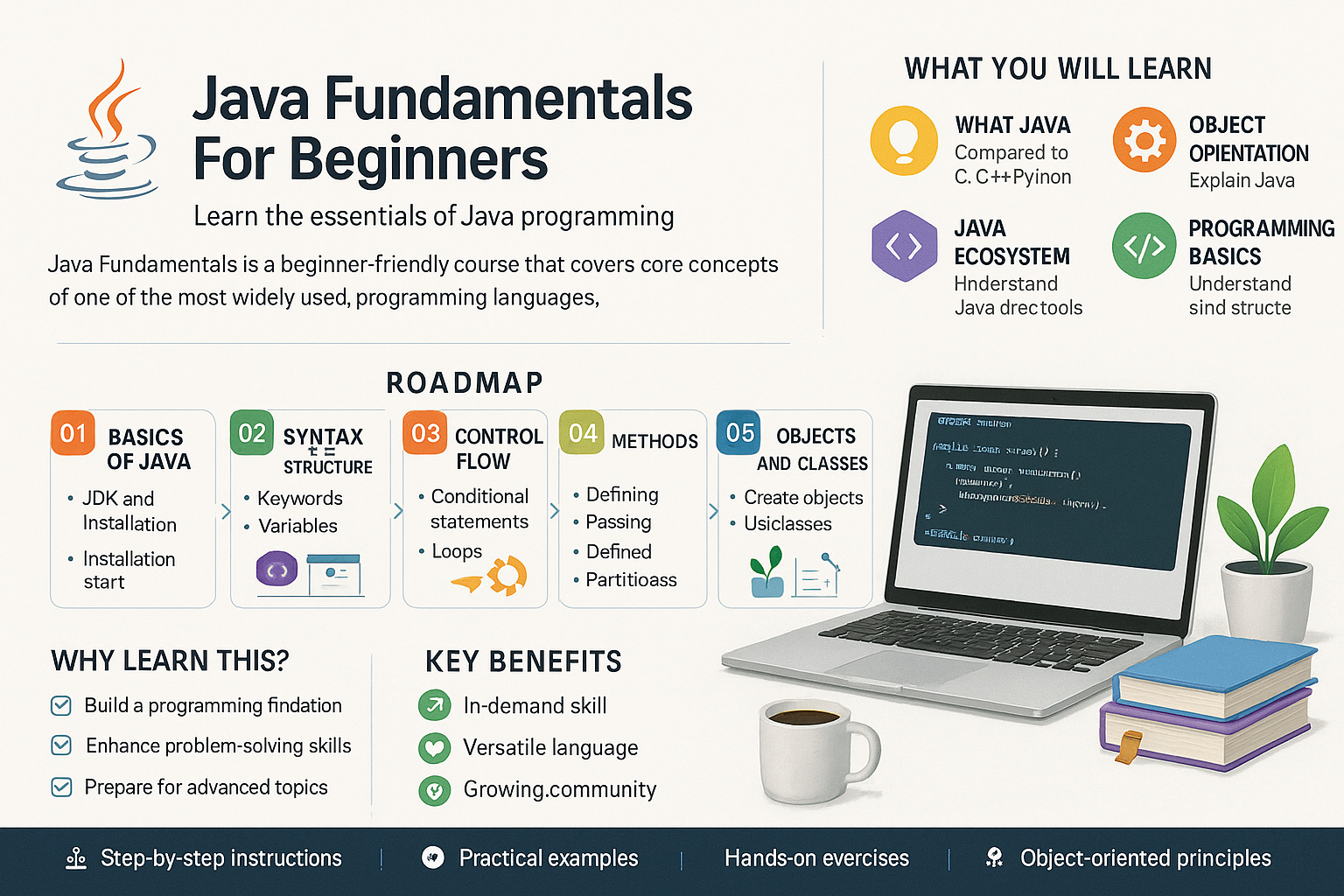
Java Fundamentals is a beginner-friendly course designed to build a strong foundation in Java programming. This course introduces learners to the core concepts of Java, one of the most widely used, platform-independent programming languages in the world. Through step-by-step explanations and practical examples, students will learn how to write, compile, and run Java programs while understanding the underlying principles of object-oriented programming.
The course covers essential topics such as Java syntax, data types, variables, operators, control flow statements, methods, arrays, and basic object-oriented concepts like classes, objects, inheritance, and encapsulation. Learners will also gain hands-on experience with exception handling, basic input/output operations, and commonly used standard libraries.
What You'll Learn
- What is Java and Why it is important to learn
- How Java is Different from C, C++ and Python
- Explain Object Oriented Concepts
- Explain JDK, JIT, Java Interpreter, Java Compiler
- Understand Java programming basics and the Java development ecosystem
- Install and configure the Java Development Kit (JDK) and development tools
- Write, compile, and run Java programs using the command line and IDEs
- Learn Java syntax, keywords, and program structure
- Work with variables, data types, and operators
- Apply conditional statements (if, switch) and loops (for, while, do-while)
- Explain programs with conditional statements
- Explain Programs with loops
- Create and use methods, including method overloading
- Understand arrays and basic data structures
- Learn object-oriented programming concepts: classes, objects, inheritance, encapsulation, and polymorphism
- Use constructors and access modifiers effectively
- Explain Final and Static with few examples
- Handle runtime errors using exception handling (try, catch, finally)
- Perform basic input and output operations
- Explain how to Read and Write Files and Different Classes involved
- Work with Java packages and commonly used standard libraries
- Write clean, readable, and maintainable Java code following best practices
- Build simple console-based Java applications
Introduction to Java
- Introduction
- What is Java?
- Importance of Java in Modern Programming
- Comparison of Java with C, C++, and Python
- Understanding the Java Development Ecosystem
- Getting Started: Installing JDK and IDEs
- Setup Java in Intellij and Run sample Java Program
Java Basics
- Java Syntax and Program Structure
- Java Data Types
- Java Variables
- Using Operators in Java
- Control Flow Statements: if and if-else
- Conditional Statements: Switch Statement
- Loops in Java: For, While, Do-While
- Combining Conditional Statements and Loops
- Understanding Arrays and Their Use
- Basic Data Structures: Multi-Dimensional Arrays
Java Basic Programs
- Finding Greatest Number from Three Values
- Explain First N Even Numbers
- First N Odd Numbers
- First N Prime Numbers
Understanding Java Classes and Methods
- Introduction to Methods in Java
- Types of Methods
- Understanding Method Overloading
- Using Arrays in Methods
- Understanding Java Classes and Objects
Working with Strings
- Introduction to Strings in Java
- Creating Strings – Literals vs Objects
- String Immutability Explained
- String Pool and Memory Management
- Common String Methods Explain with Examples
- Concatenating and Comparing Strings
- StringBuilder and StringBuffer
Object-Oriented Programming (OOP) Concepts
- Exploring Inheritance
- Encapsulation and Access Modifiers
- Polymorphism in Java
- Using Constructors Effectively
- Final and Static Keywords Explained
Exception & Error Handling
- Understanding Runtime Errors and Exception Handling
- Try, Catch, Finally Blocks
- Throwing and Catching Exceptions
File Handling (I/O Operations)
- Performing Basic Input and Output
- Classes Involved in File Handling
- Reading and Writing Files in Java
Java Packages and Libraries
- What are Java Packages?
- Creating and Using Custom Packages
- Exploring Commonly Used Standard Libraries
- The Import Statement in Java
- Best Practices for Managing Packages
- Building a Simple Application Utilizing Libraries
Best Practices in Java Programming
- Writing Clean Code in Java
- Code Readability and Maintainability
- Java Naming Conventions
- Documentation and Comments
- Effective Use of Annotations
- Refactoring Java Code
Building Simple Console-Based Applications
- Defining Application Requirements
- Planning Your Application Structure
- Implementing Core Features
- Testing and Debugging Your Application
- User Input Handling and Interaction
- Finalizing Your Application for Submission
Moving Forward: Advanced Topics
- Introduction to Java Collections Framework
- Understanding Multithreading Basics
- Overview of Popular Java Frameworks
- Introduction to Enterprise Java Development
Course Review and Final Project
- Review of Key Concepts
- Preparation for Final Project
- Final Project Guidelines and Expectations
- Presenting Your Project
- Course Feedback and Next Steps
- Celebrating Your Accomplishments