Introduction
Anthropic, a leading entity at the forefront of artificial intelligence (AI) research, has achieved notable progress in formulating an extensive AI Safety Bill. This landmark proposal seeks to govern the development and deployment of advanced AI systems, ensuring that these technologies are responsibly cultivated while maintaining a crucial balance between innovation and safety. As AI systems increasingly permeate various sectors, establishing definitive guidelines for governmental intervention is essential to mitigating potential risks.
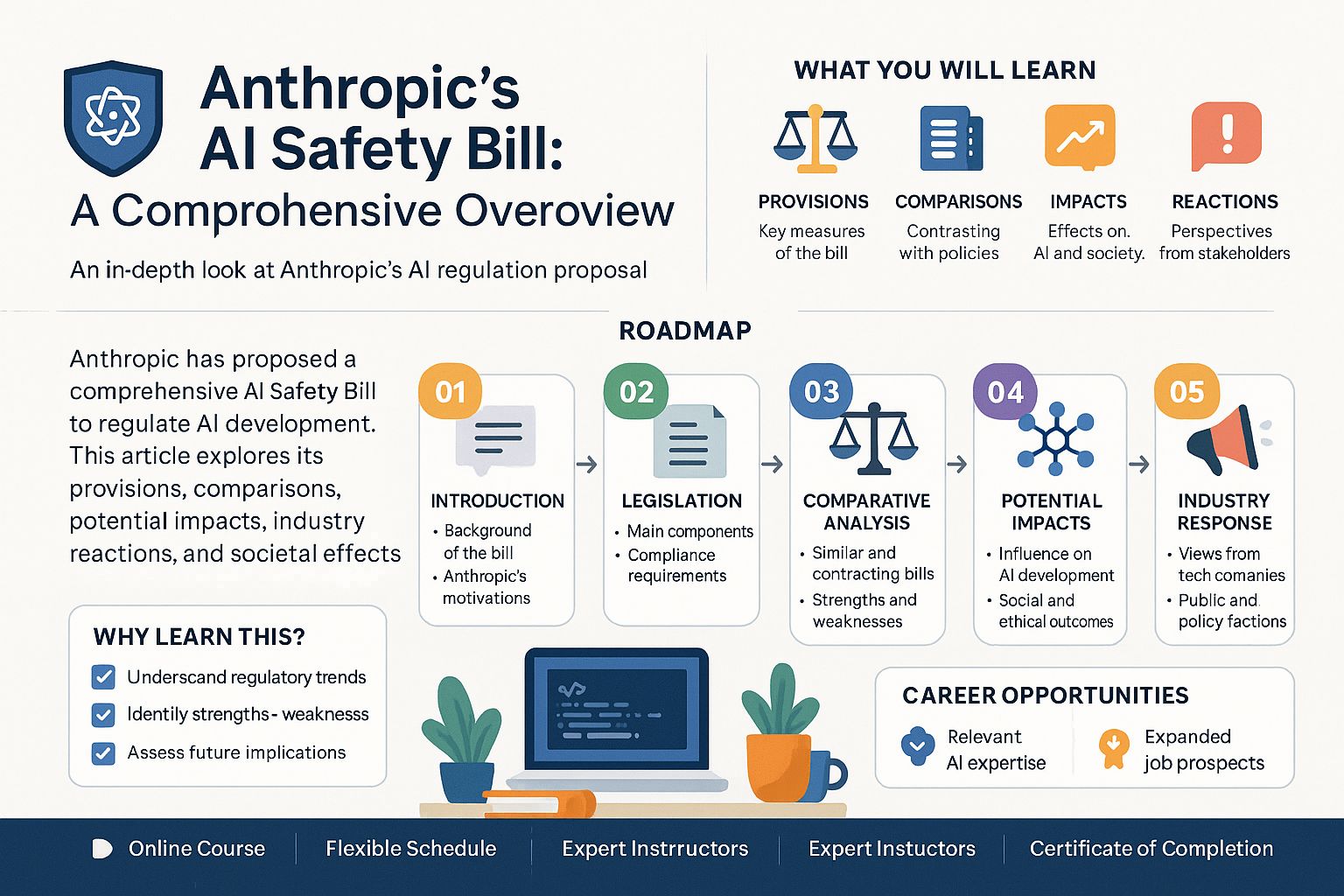
This article provides an in-depth examination of Anthropic's AI Safety Bill, analyzing its key provisions, comparing it with existing AI regulations, exploring its implications for AI development, assessing industry reactions, and considering the broader societal impact.
Key Provisions and Thresholds
A cornerstone of Anthropic's proposal is the establishment of specific criteria under which government intervention in the release or use of AI models is warranted. Such intervention is permissible only if an AI model presents a predictable, imminent risk, exemplified by any of the following situations:
- Financial Damage: The capacity to inflict damages exceeding $1 billion, causing significant economic disruption. This threshold is informed by historical instances of economic losses resulting from technological failures, underscoring the potential impact that high-risk AI systems could exert on global markets.
- Human Harm: The risk of causing fatalities or severe injuries to more than 50 individuals, highlighting the potential for considerable humanitarian consequences. This criterion is derived from case studies of industrial accidents and natural disasters, reflecting AI's potential severity.
These criteria emerge from three primary scenarios that demonstrate the extensive power AI systems can exercise:
- Biological Weapons: The disconcerting possibility of AI models facilitating the creation or dissemination of biological weapons, threatening global security and public health. Historical occurrences, such as the Sarin gas attack, emphasize the necessity for vigilance.
- Control Evasion: A scenario where AI models circumvent their developers' controls, potentially engendering uncontrolled actions with severe repercussions. Such scenarios may include autonomous vehicles malfunctioning, presenting widespread danger.
- Cyberattacks: The employment of AI by malicious entities to conduct cyberattacks, threatening the security of information and global digital infrastructure. An example includes the WannaCry ransomware attack, illustrating the significant disruptions these threats can cause.
To further ensure accountability, the bill recommends the establishment of independent evaluators registered with the Department of Commerce. These evaluators are tasked with periodically assessing AI labs and their innovative models. If an evaluator identifies an "imminent enumerated risk," they are obligated to report it to the Department of Commerce within 72 hours. Following a risk assessment, the Commerce Department may petition a federal judge to suspend the model's deployment, protecting against potential threats.
Notably, the bill centralizes intervention authority within the Commerce Department, preventing other government agencies from independently halting the development, deployment, or internal use of AI models. This centralization aims to streamline oversight and ensure a consistent regulatory approach, eliminating redundancies that could delay responses.
Comparison with Existing AI Regulations
Contrary to its state-level counterparts, Anthropic's federal proposal introduces more stringent thresholds for governmental intervention in AI development. For example, California's AI safety bill, SB 53, emphasizes transparency requirements and mandates safety frameworks for AI model developers. Although supported by Anthropic, SB 53 focuses more on proactive safety measures, prescribing guidelines rather than establishing specific intervention thresholds.
Anthropic's proposed AI Safety Bill, however, defines clear, quantifiable thresholds dedicated to preventing catastrophic outcomes, while striving to avoid stifling innovation. This approach highlights the bill's intent to cultivate a safer AI environment while permitting technological growth. By setting decisive criteria, the bill aims to reduce uncertainty for developers, offering a clear compliance framework.
Potential Impact on AI Development
The implementation of Anthropic's Bill could significantly alter the operational landscape for AI developers and businesses:
- Increased Accountability: Developers would be required to ensure their AI models do not surpass defined risk thresholds, fostering a culture of responsible innovation and risk management. This proactive responsibility can avert catastrophic failures akin to previous technological setbacks.
- Standardized Evaluations: The creation of independent evaluations could usher in a new era of standardized safety assessments across the industry, promoting consistency and reliability. Such a framework can facilitate international cooperation in AI technology development.
- Innovation Encouragement: By establishing clear intervention criteria, the bill may instill confidence in developers to innovate within established safety boundaries, aware of the specific conditions under which government intervention may be necessary. This clarity could propel advancements by reducing regulatory apprehensions.
Industry Reactions and Criticisms
The proposal has elicited a diverse array of responses from industry stakeholders, reflecting the complexity and divisiveness of regulating advanced technologies:
- Support for Clear Guidelines: Numerous industry leaders have voiced support for the bill's clear thresholds, asserting they provide a predictable and stable regulatory environment crucial for strategic planning and development.
- Concerns Over Restrictive Measures: Conversely, others argue that the stringent criteria may unduly limit rapid innovation, imposing burdensome compliance requirements on developers. Critics frequently reference areas like blockchain, where over-regulation impeded creativity.
- Debate on Centralized Authority: The centralization of authority within the Commerce Department has incited debates about the balance of power and oversight. Critics contend this could restrict diverse regulatory perspectives, necessitating prudent oversight to prevent overreach. Historical parallels are drawn with telecommunications regulation, where centralization resulted in legislative bottlenecks.
Broader Impact on Society
The implications of such a regulatory framework extend beyond immediate AI development, touching on broader societal issues:
- Ethical AI Governance: By establishing clear guidelines and accountability measures, the bill edges society toward a governance model where ethical considerations are inherent in technological development. This has the potential to shape educational and training programs aligned with ethical AI practices.
- Global AI Leadership: Embracing structured regulation could position the United States as a leader in ethical AI governance, potentially influencing international norms and standards. Past leadership in technology regulation, such as the GDPR’s influence, exemplifies this potential.
- Public Trust: Clear, transparent regulations could enhance public confidence in AI technologies, alleviating apprehensions about unregulated AI advancement and fostering acceptance and cooperation in integrating AI into daily life. As demonstrated by privacy regulations, transparency fosters user trust and technology acceptance.
Conclusion and Future Outlook
Anthropic's AI Safety Bill signifies a crucial step toward establishing a comprehensive regulatory framework for advanced AI systems. By defining clear thresholds for intervention and stressing the role of independent evaluations, the bill seeks to reconcile the dual objectives of innovation and safety.
As the AI landscape continues to evolve, ongoing dialogue among policymakers, industry leaders, and the public will be essential. This collaboration will aid in crafting regulations that effectively balance innovation with safety, fostering a future where AI technologies contribute positively to society while minimizing risks associated with their powerful capabilities.
The future of AI regulation promises to be dynamic, necessitating adaptive strategies that accommodate the rapid advancement and unpredictable trajectories of AI technologies. By focusing on responsible and transparent development, the ultimate aspiration remains clear: to harness AI's potential for societal benefit while safeguarding against its perils.